
The 6 Most Common Soccer Injuries You Need to Know About
Soccer is the most played team sport in the world and one of the leading causes of sports injuries in young athletes. According to epidemiological research on muscular injuries in soccer (Ekstrand et al., 2013-2018), lower limb injuries account for over 80% of all soccer-related trauma. That doesn’t have to be the case. The vast majority of the most common soccer injuries are preventable with proper preparation, smart training habits, and consistent medical monitoring. This guide, brought to you by Looking For Soccer, the reference platform for booking soccer camps at elite clubs, covers the most frequent soccer player injuries, their causes, warning signs, recovery timelines, and how to prevent them for players and parents alike.

Why do young soccer players get injured more?
Soccer injuries in teenagers don’t follow the same patterns as in adults. Three risk factors specific to young players account for the majority of injuries:
- Growth. Between ages 10 and 16, bones grow faster than tendons and muscles. This imbalance creates significant tension points particularly at the knee (Osgood-Schlatter disease) and the heel (Sever’s disease). A young player going through a growth spurt is structurally more vulnerable to knee injuries in soccer and tendon trauma than an adult training at the same level.
- Overtraining. Soccer injury statistics show that injury peaks in young players consistently coincide with periods of double sessions or back-to-back tournaments. This is also one of the reasons why the mistakes to avoid when trying to improve at soccer always include training load management as a top priority. A teenager’s body recovers more slowly than it appears. A player training five times a week without load management accumulates muscle fatigue that neither they nor their parents can clearly detect.
- Poor recovery. Insufficient sleep, unbalanced diet, skipped stretching sports nutrition and recovery are the two most underestimated variables in preventing soccer injuries in young players.
What are some common injuries that soccer players face?
1. Ankle sprain
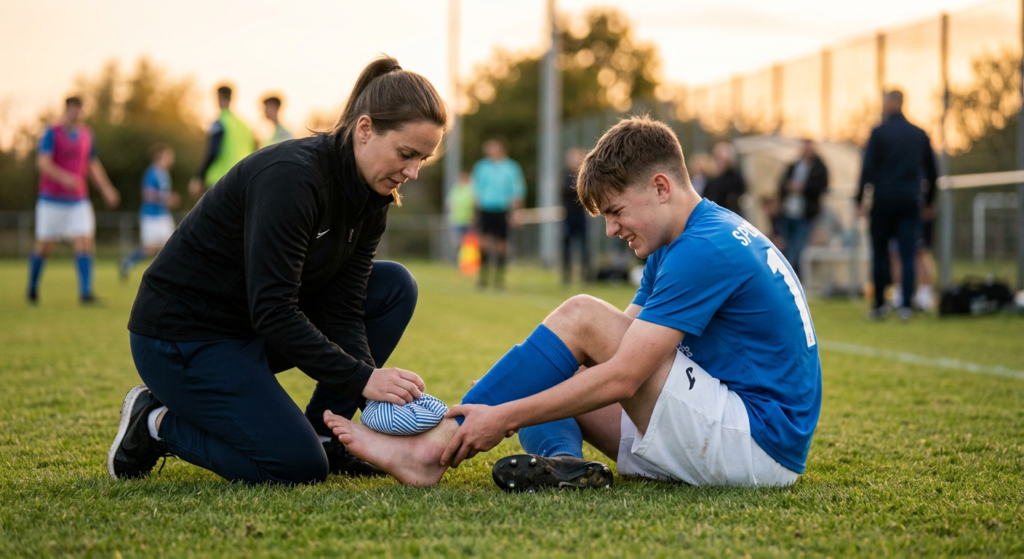
The ankle sprain is the most common soccer injury across all age groups and one of the leading causes of missed playing time, which can directly reduce a player’s visibility to scouts. It accounts for 15 to 20% of all soccer injuries. It most often occurs during an awkward plant, a bad landing, or contact with another player. The lateral ankle sprain (lateral ligament) is the most frequent form.
- Warning signs: immediate pain on weight-bearing, swelling, bruising
- Recovery time: 1 to 6 weeks depending on severity (grade 1 to 3)
- Prevention: ankle strengthening, proprioception work, cleats suited to the field surface
2. Hamstring strain
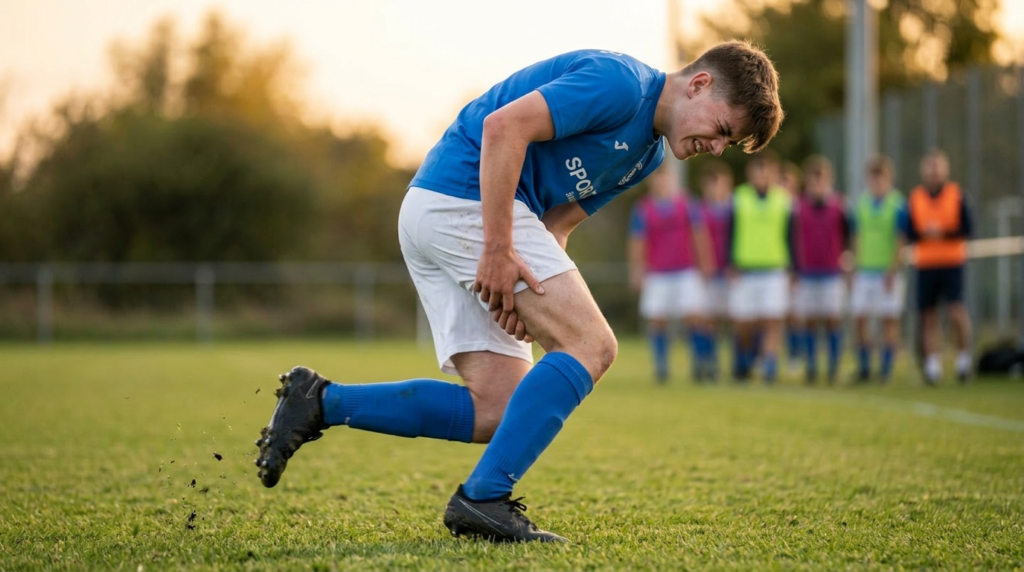
The hamstring injury is the most common muscle injury in both professional and amateur soccer. It affects the back of the thigh during a sprint or sudden change of direction. In young players, it’s most often linked to insufficient warm-up or undetected pre-existing muscle fatigue.
- Warning signs: sudden localized pain in the thigh, a “pop” sensation, inability to run
- Recovery time: 3 to 8 weeks depending on injury grade
- Prevention: eccentric strengthening (Nordic Hamstring exercise), progressive warm-up, load management
3. Groin and adductor injury
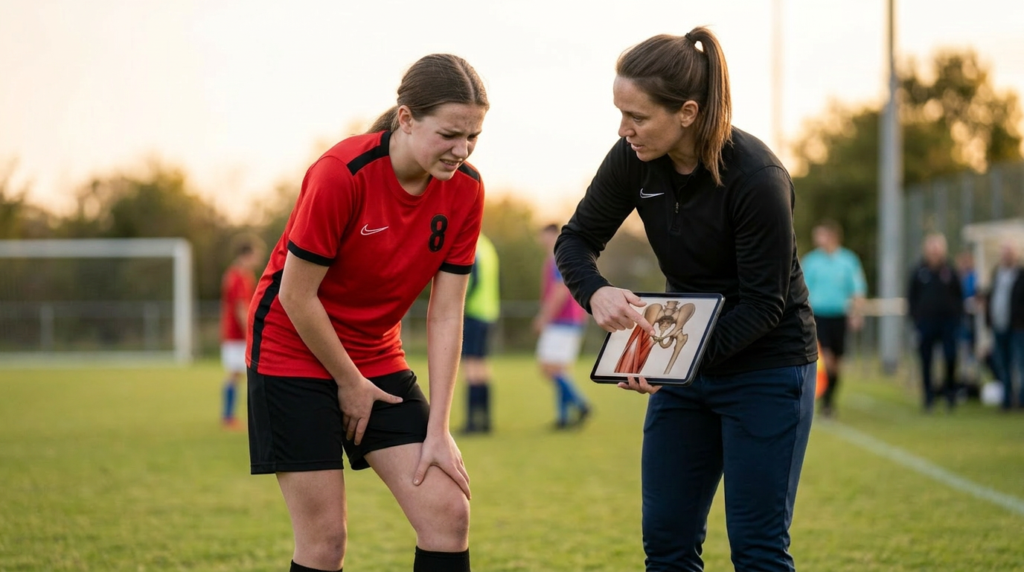
The groin injury is one of the least covered soccer injuries in mainstream guides but one of the most debilitating. It affects the muscles connecting the pubis to the inner thigh and occurs during shots, changes of direction, or tackles. Groin pain (athletic pubalgia), the chronic form, is particularly feared because it can last several months if not addressed early.
- Warning signs: groin pain during exertion, discomfort when shooting or lifting the knee, persistent resting pain in chronic cases
- Recovery time: 2 to 12 weeks for a simple adductor strain; several months for established pubalgia
- Prevention: adductor strengthening, regular stretching, training load monitoring
4. Patellar tendinitis (jumper’s knee)
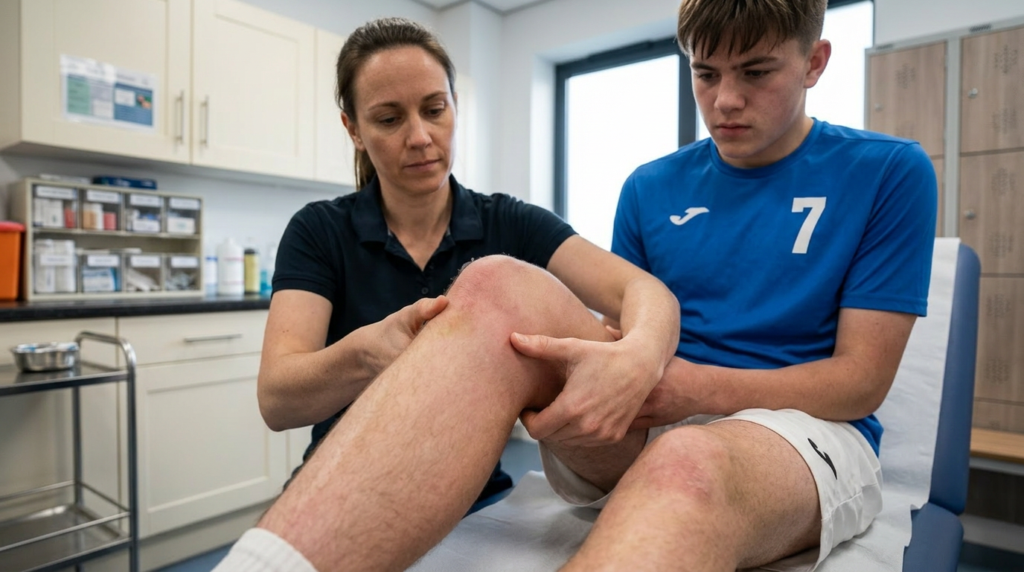
The most common soccer knee injury outside of ACL tears is patellar tendinitis, also called jumper’s knee. It results from repetitive stress on the tendon connecting the kneecap to the shinbone heavily loaded during shots, jumps, and sprints. In adolescents still growing, it can be confused with Osgood-Schlatter disease, which affects the same area.
- Warning signs: pain below the kneecap during activity, morning stiffness, discomfort going down stairs
- Recovery time: 4 to 12 weeks depending on severity and response to treatment
- Prevention: eccentric quad strengthening, proprioception work, temporarily reducing shooting volume when pain appears
5. Calf and quad strain
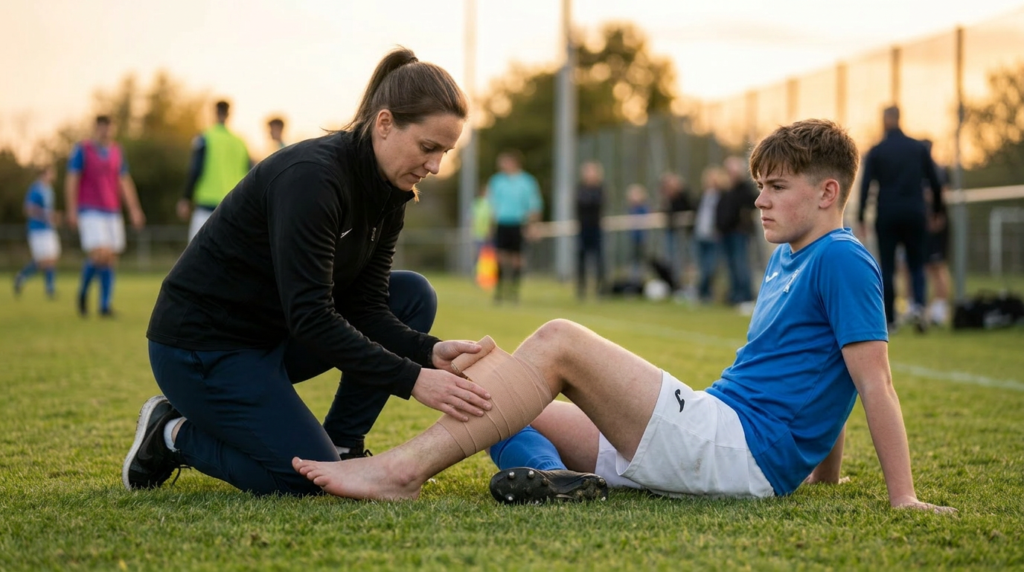
Calf and quad strains cover muscle injuries in the lower limbs outside the hamstrings. The calf (gastrocnemius and soleus) is particularly exposed during accelerations and full-speed shots. The quad (quadriceps, rectus femoris) is vulnerable during shots or direct contact.
- Warning signs: sudden localized pain, swelling, bruising in severe cases
- Recovery time: 2 to 6 weeks depending on grade
- Prevention: progressive warm-up, targeted muscle strengthening, proper hydration during training
6. ACL tear (anterior cruciate ligament)
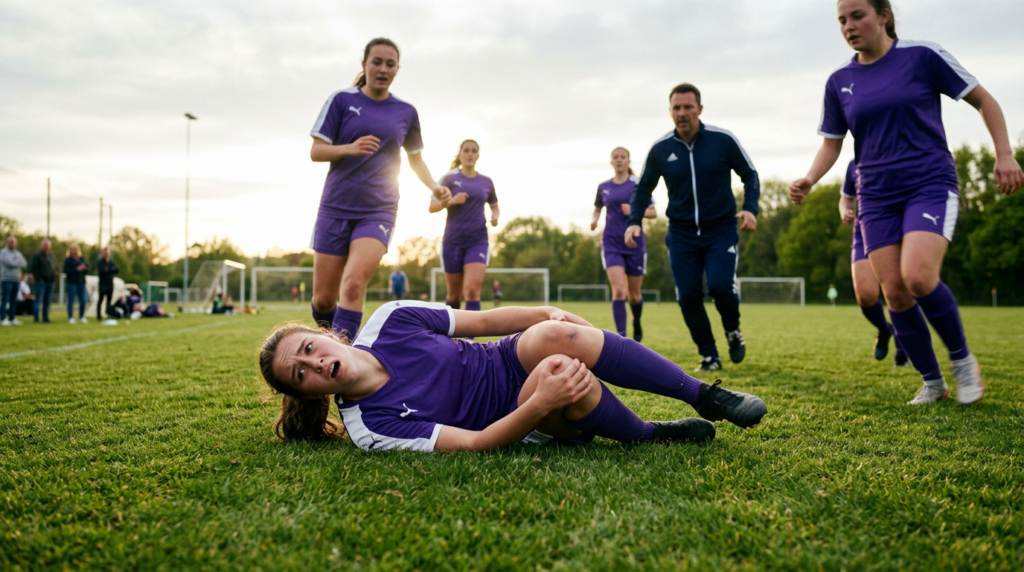
The ACL tear is the most feared serious soccer injury. It most often occurs without contact, during a pivot, sudden change of direction, or poorly controlled jump landing. It is significantly more common in female players (2 to 6 times more than in males) due to anatomical and biomechanical differences. Soccer boarding school programs partnered with Looking For Soccer integrate ACL prevention exercises from the very first weeks of training.
- Warning signs: audible pop, immediate swelling, knee instability, inability to continue playing
- Recovery time: 6 to 12 months following surgery and full rehabilitation
- Prevention: FIFA 11+ program (scientifically validated), hamstring strengthening, landing and plant mechanics training
How to prevent soccer injuries ?
The warm-up first line of defense
A structured 15 to 20-minute warm-up reduces soccer injury risk by 30 to 50% according to research. The FIFA 11+ program, developed specifically for soccer, combines running, muscle strengthening, and balance exercises. It has shown significant reductions in ligament and muscle injuries across multiple controlled studies. A player who shows up and starts playing without warming up isn’t taking a one-in-a-thousand risk they’re taking a structurally documented one.
Targeted muscle strengthening
Strength training isn’t just for adults. An age-appropriate strengthening program targeting the hamstrings, adductors, quads, and ankles is one of the most effective preventive investments available. The Nordic Hamstring exercise (eccentric hamstring strengthening) is now recognized as one of the best tools for preventing muscle strains in soccer. Some of the intensive soccer camps listed on our site integrate it systematically into their physical preparation.
Recovery often overlooked, always decisive
Recovery doesn’t start the day after the game. It starts within 30 minutes of the final whistle: rehydration, carbohydrate and protein intake, light stretching. A player who skips recovery builds up residual muscle fatigue that multiplies their injury risk at the next training session. Sleep is the most underestimated variable: below 8 hours per night, injury risk in young athletes increases significantly according to research published in the British Journal of Sports Medicine. For players in residential academy programs, managing sleep quality is a daily challenge and a real one.
Sports nutrition
An insufficient or unbalanced diet weakens muscles and tendons. Protein, iron, and vitamin D deficiencies are particularly common in young soccer players and are directly linked to higher muscle injury rates. Our guide on sports nutrition for young soccer players covers recommended intakes by age and training volume.
What to do immediately after a soccer injury ?
In the first minutes after a soccer injury, the RICE protocol applies to virtually all muscle and ligament trauma:
- R for Rest: stop the activity immediately, don’t push through to finish the game
- I for Ice: apply ice wrapped in a cloth, 15-20 minutes every 2 hours for the first 48 hours
- C for Compression: compression bandage to limit swelling
- E for Elevation: elevate the injured limb to reduce swelling
What not to do: apply heat within the first 48 hours (worsens swelling), massage the injured area immediately, return to training before pain has completely resolved. For any persistent pain, significant swelling, or joint instability, medical clearance is required before any return to play.
How injury prevention and medical support work at Looking For Soccer partner programs ?
Whether it’s a one-week camp or a 10-month academy program, injury prevention is one of the criteria Looking For Soccer evaluates in every partner program. Here’s what the best programs include and what families are entitled to ask about before enrolling their child :
- On-site medical coverage a physio or doctor available during training, not just for emergencies. This is a non-negotiable baseline in any serious program, whether it’s a week-long camp or a full-year academy.
- A clearly defined injury management protocol what happens if your child gets injured mid-camp? Who handles first response, transport if needed, and communication with the family? These answers should be provided before booking, not after.
- Individual training load monitoring to prevent the fatigue spikes that precede the majority of muscle injuries. Programs that stack sessions without managing recovery produce more injuries, not more improvement.
- Active recovery sessions built into the weekly schedule not optional, not cut when sessions run long.
- Nutrition adapted to young athletes: balanced meals, carbohydrate and protein intake timed around training, access to a nutritionist in the most structured programs.
Families who ask about medical support before signing up are asking the right questions. Our team can help you evaluate these criteria for every camp and academy in our catalog and point you toward the programs that take injury prevention seriously.
Frequently Asked Questions about Soccer injuries
At what age are soccer injuries most common?
Two peaks emerge from soccer injury statistics: between ages 12 and 15 (rapid growth phase, bone and tendon vulnerability) and between 18 and 25 (peak training load, first exposure to high-level competition). Growth-related injuries Osgood-Schlatter, Sever’s disease are specific to adolescents and resolve once growth is complete.
Can my child keep playing with a mild ankle sprain?
No. Even a grade 1 sprain (mild ligament stretch) requires at minimum 48 to 72 hours of rest before any return to sport. Returning too early is the leading cause of re-injury and a recurring ankle sprain becomes chronic instability that follows the player for years. A re-injury can also directly affect a player’s chances of being scouted.
How long does recovery from a soccer knee injury take?
It depends entirely on the injury. Mild patellar tendinitis: 4 to 6 weeks. Meniscal tear: 6 to 12 weeks depending on treatment. ACL tear with surgery: 6 to 12 months minimum, with a full return-to-play protocol before resuming competition.
Does growth increase injury risk in soccer?
Yes, and it’s well documented. During growth spurts, growth plates (vulnerable zones at the ends of bones) are especially susceptible to impact and overload. This is a reason to watch for warning signs more carefully in players who are growing rapidly not to stop them playing, but to adjust load and take persistent pain seriously.
What’s the difference between a pull, a strain, and a tear?
These are three grades of the same type of muscle injury. A pull (grade 1) involves overstretching of fibers without rupture recovery typically 1 to 2 weeks. A strain (grade 2) involves partial fiber rupture recovery 3 to 6 weeks. A tear (grade 3) is a complete or near-complete rupture recovery 2 to 4 months, sometimes requiring surgery.
Also read: