
How to write a Soccer Player resume that gets you recruited ?
Many young players assume that performance on the field is the only thing that matters when it comes to getting noticed. That is only partly true. A well-written soccer player resume is the tool that turns a good performance into a concrete opportunity, because it allows a recruiter to understand a player’s profile quickly, before they have even watched them play. This guide, brought to you by Looking For Soccer, the reference platform for booking soccer camps at elite clubs, explains how to build an effective soccer resume. To understand exactly what role this document plays in the recruitment process, see our guide to soccer scouting.

Why a soccer resume matters, even for a young player
As covered in our guide to getting scouted in soccer, video is the most effective tool when a recruiter wants to know more about a player. The soccer player resume is the natural complement to that video: it summarizes everything a recruiter needs to know before clicking the link career history, level of competition, position, and statistics.
A strong soccer resume does not raise a player’s level, but it stops a good profile from going unnoticed simply because it was not presented clearly. Recruiters receive dozens of inquiries every week, and a structured, readable resume stands out immediately from those that are not.
The essential sections of a soccer player resume
An effective soccer player resume is generally built around five core sections, each providing specific and useful information to the recruiter.
Personal and physical information
Full name, date of birth, height, weight, current club, and contact details (a parent’s phone number and email for under-18s) are the basic details expected at the top of the document. Citizenship and any dual nationality are worth including as well, since some clubs and academies abroad pay close attention to eligibility.
Soccer career history
This section presents a chronological list of clubs and teams the player has represented, with the corresponding dates and level of competition at each stage. Any state, regional, or national team selections should be mentioned here, as this is one of the first things recruiters look at when assessing a player’s real level.
Position and technical qualities
The primary position should be stated clearly, along with any secondary positions if relevant. A short description of the player’s key technical and physical qualities speed, aerial ability, vision, stronger foot gives the recruiter a concrete sense of the profile before they have seen the player in action.
Achievements and statistics
This section covers goals scored, assists, titles won, and any individual awards such as tournament MVP. Concrete numbers are always more persuasive than vague descriptions: stating a precise goal tally over a season carries significantly more weight than simply calling oneself a “strong finisher”.
Video links and references
A link to a highlight reel is now close to essential. It is also worth including the contact details of a coach or club director willing to speak to the player’s character and ability, as a verifiable reference reassures a recruiter who does not yet know the player.
Example of a soccer player resume structure
The following illustrates the structure of a typical soccer player resume, using entirely fictional details for illustration purposes only. This example does not correspond to any real player.
The document usually opens with the player’s identity: full name, date of birth, height, and weight. This is followed by the primary position and any secondary positions, the stronger foot, the current club or academy, and the corresponding level of competition.
The career history section then presents a chronological list of clubs and teams with the relevant dates, followed by any representative team selections at state, regional, or national level. A statistics section summarizes the most recent season: games played, goals scored, assists. The document closes with a short list of the player’s key qualities, a link to a video of their best performances, and the contact of a coach who can vouch for their commitment and level.
Common mistakes to avoid on a soccer player resume
Certain mistakes appear frequently and undermine the effectiveness of a soccer resume, even when the player’s ability is genuine.
Keeping it too long is the first issue to avoid. One page is more than enough, because a recruiter typically spends only a few seconds on a resume before deciding whether to watch the video or not, and will not read through two dense pages.
Including information that cannot be verified is another serious problem. Exaggerating statistics or inventing representative team selections is quickly spotted and discredits the entire document, since the resume’s credibility depends entirely on the accuracy of what it contains.
The absence of a video link significantly reduces the resume’s impact, since numbers alone never replace a few minutes of actual footage. An unprofessional photo can also work against the player. If a photo is included, it should be recent, of good quality, and ideally taken in soccer gear rather than a cropped vacation snapshot.
Finally, spelling errors give an impression of carelessness that works against the player, even when their soccer ability is not in doubt.
Who to send your soccer player resume to ?
The right recipients depend on the player’s goals: amateur clubs, private academies, development centers, or independent scouts. As explored in our guide to mental preparation in soccer, confidence in your approach comes from being well prepared, and the same principle applies to sending out a resume.
Sending an unsolicited application to a professional club has very little chance of leading anywhere, since recruitment departments receive hundreds of submissions and prioritize players they have already identified in competition. The resume is therefore most useful as a response tool rather than a cold outreach tool. When a recruiter or coach asks to know more about a player after spotting them in a game or tournament, having a clean and complete resume ready to send immediately makes a real difference.
Looking For Soccer’s role in a young player’s journey
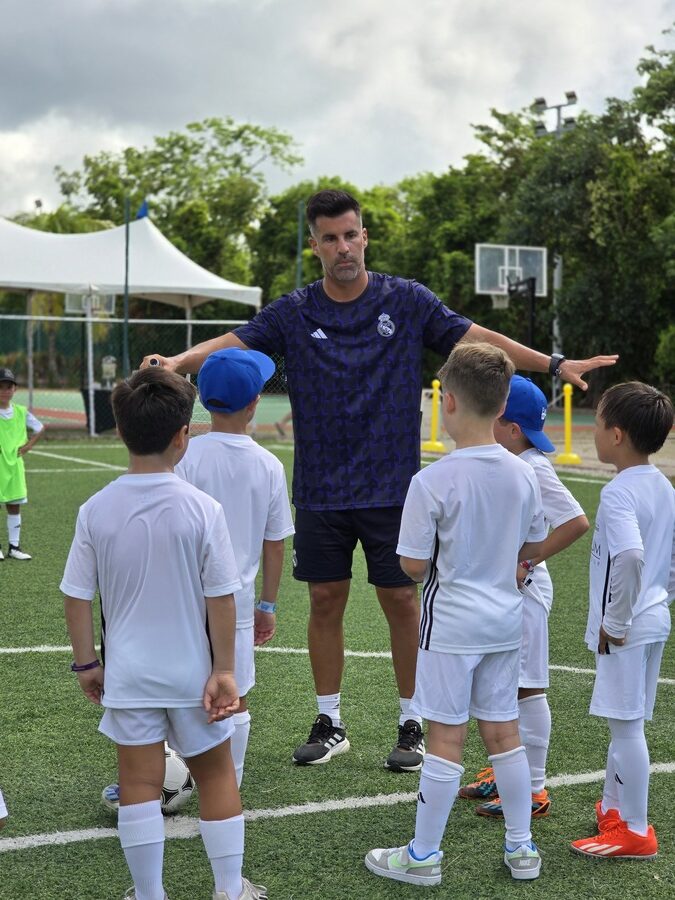
Looking For Soccer helps families book camps and programs with partner clubs and academies in the US and abroad. Those clubs deliver soccer training in a professional environment, with certified coaches and quality facilities.
It is important to be straightforward about what this means in practice. Attending a partner camp or program comes with no guarantee of being scouted or signed. Getting noticed depends on many factors, including an element of timing and circumstance that no one can promise. What these programs do offer is a demanding training environment that contributes to a player’s development and can, over time, add real substance to a resume. Families who want to explore the options can browse our intensive soccer camps, which detail the programs available by age and level.
Frequently Asked Questions Soccer player resume
Should a soccer player resume include a photo?
A photo is not required, but it is recommended if the quality is good. If no suitable photo is available, it is better to leave it out than to include a poor-quality one.
At what age should a young player have a soccer resume?
A resume becomes useful once the player is competing in organized competitions and considering tryouts or academy applications, generally from around age 12 or 13. Before that, development on the field takes clear priority over any formal document.
Should the resume look different for a club versus a college program?
The content is broadly the same, but the level of detail and what gets emphasized will differ. For a college program, academic GPA, graduation year, and eligibility information become important alongside the soccer credentials. For a private academy or development center, precise statistics and video quality take priority.
Should the resume change depending on the position, like goalkeeper versus forward?
Yes, in terms of the qualities highlighted. A goalkeeper will emphasize reflexes, footwork, and command of the penalty area, while a forward will focus on finishing ability and attacking output. The overall structure of the resume stays the same only the qualities section adapts to the position played.
Also read: