
The World’s Best Football Academies in 2027: From La Masia to Ajax
90% of academy players in England are released before the age of 18. Of the 1.5 million boys who play organised youth football in this country, approximately 180 will be signed professionally by a Premier League club. That is a success rate of 0.012%. Yet the clubs that consistently produce the world’s best players operate entirely differently. They release fewer players, develop more completely, and run systems that stay coherent from U9 to the first team. This article identifies the world’s best football academies using the most objective data available: the CIES Football Observatory January 2026 report, which measures the number of academy-trained players active in professional leagues worldwide, weighted by playing time and competitive level. Looking For Soccer, the reference platform for booking football camps at elite clubs, has used this ranking as the backbone of its selection.

What is a professional football academy?
A professional football academy is a club-integrated structure responsible for developing young players over multiple years, typically from age 11 to 18, combining daily coaching, adapted schooling, residential accommodation, and medical support. The goal is to produce players capable of reaching the first team or generating significant transfer value. This is fundamentally different from a football camp, a football boarding programme, or a private training centre. In England, the EPPP (Elite Player Performance Plan) governs academy standards from Category 4 through to Category 1, with Category 1 academies like Chelsea and Manchester City operating at the highest domestic level. To understand what professional academy development looks like in practice, read our guide on how professional football academies work.
How do you measure the world’s best football academy?
Every professional club has a youth programme. Very few have a world-class academy. Five criteria separate the best from the rest: consistent production across multiple decades, the professional level reached by alumni, transfer revenue generated, a clearly defined and transmissible playing philosophy, and infrastructure quality. The most objective current benchmark is the CIES Football Observatory, which publishes an annual global ranking of academies based on the number of trained players active in professional leagues worldwide, adjusted for competitive level and minutes played. Weekly Post 529, published in January 2026, is the most recent edition of this ranking and provides the structure for this article. Chelsea and Manchester City both appear in the global top ten, which confirms what the English EPPP system has long argued: Category 1 investment produces Category 1 results.
| Club / Academy | CIES Ranking 2026 | Key philosophy | Notable alumni |
|---|---|---|---|
| SL Benfica (Benfica Campus) | No. 1 Worldwide (Global, 49 leagues) | Individual technical development and data-driven innovation | B. Silva, R. Dias, J. Félix, J. Neves |
| FC Barcelona (La Masia) | No. 1 Worldwide (Big 5 criterion) | Possession, pressing, collective intelligence | L. Messi, L. Yamal, Gavi, P. Cubarsí |
| Real Madrid (La Fábrica) | No. 2 Worldwide (Big 5 criterion) | Tactical flexibility, winning culture, mental strength | Raúl, I. Casillas, D. Carvajal, A. Hakimi |
| Paris SG (PSG Campus) | No. 3 Worldwide (Big 5 criterion) | Technical creativity, superior athleticism | K. Coman, M. Maignan, W. Zaïre-Emery |
| Stade Rennais | No. 4 Worldwide (Big 5 criterion) | Early development, explosive wing play, full academic integration | E. Camavinga, O. Dembélé, M. Tel, D. Doué |
| Ajax Amsterdam (De Toekomst) | No. 5 Worldwide (Big 5 criterion) | Total Football and the TIPS system | J. Cruyff, D. Bergkamp, F. De Jong |
| Chelsea FC (Cobham) | No. 6 Worldwide (Big 5 criterion) | Physical intensity, Premier League competitiveness, winning mentality | J. Terry, R. James, M. Mount, C. Gallagher |
| Manchester City (CFA) | Top 10 Worldwide (8th equal) | Positional play, spatial mastery, tactical intelligence | P. Foden, J. Sancho, C. Palmer, R. Lewis |
The world’s best football academies
1. Benfica Campus — SL Benfica
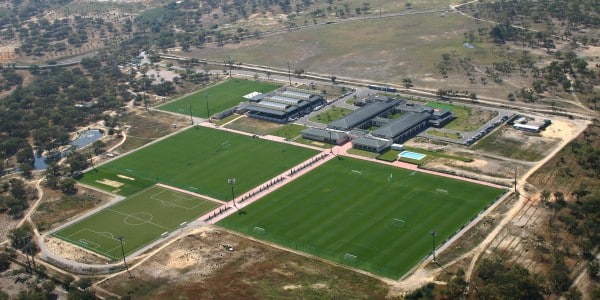
The academy that generates more transfer revenue than any other club in the world is not in Spain or England. It is in Lisbon.
According to CIES Football Observatory Weekly Post 518, published in October 2025, Benfica ranks first globally with 93 academy-trained players currently active across 49 professional leagues worldwide. A CIES study from April 2026 confirmed Benfica also leads the decade-long revenue ranking with 589 million euros generated through transfers of academy graduates. The Seixal campus, opened in 2006, houses over 190 players across 9 pitches, with 80 full-time residents and 330 staff members working on-site daily. Benfica’s model is a direct challenge to the English academy system: it does not cut players on physical profile at 14, and it does not operate a binary in/out structure at each age group. In 2025, Benfica won all three national youth titles in the same season: U15, U17 and U19.
2. La Masia — FC Barcelona

Six of the eleven players aged 18 or under to have started a LaLiga match this season play for Barcelona. How many U18 players started a Premier League match for a top-six club this season?
According to CIES Weekly Post 531, FC Barcelona leads the Big 5 ranking with academy graduates under contract valued at a combined 738 million euros. 40 La Masia graduates are currently active in Europe’s top five leagues. In 2010, La Masia became the first academy in history to have trained all three Ballon d’Or finalists in a single year: Messi, Iniesta, and Xavi. For the 2024-2025 squad, 18 of 34 players in the professional group had passed through La Masia. Lamine Yamal arrived at the club aged 7 and made his first-team debut at 15 years, 9 months, and 16 days. La Masia is now based at the Ciutat Esportiva Joan Gamper with 9 pitches, an integrated residence, and a dedicated school. The same 4-3-3 system, the same pressing and possession philosophy, is taught from U9 to the first team without interruption. In English academy circles, this vertical coherence is precisely what the EPPP sought to replicate with mixed results at most clubs. You cannot join La Masia without being scouted. But you can train in its environment. Looking For Soccer offers a FC Barcelona camp in Barcelona for all levels, boys and girls. To understand how professional academies actually recruit players, read our guide on how can you train at la Masia.
3. La Fábrica — Real Madrid
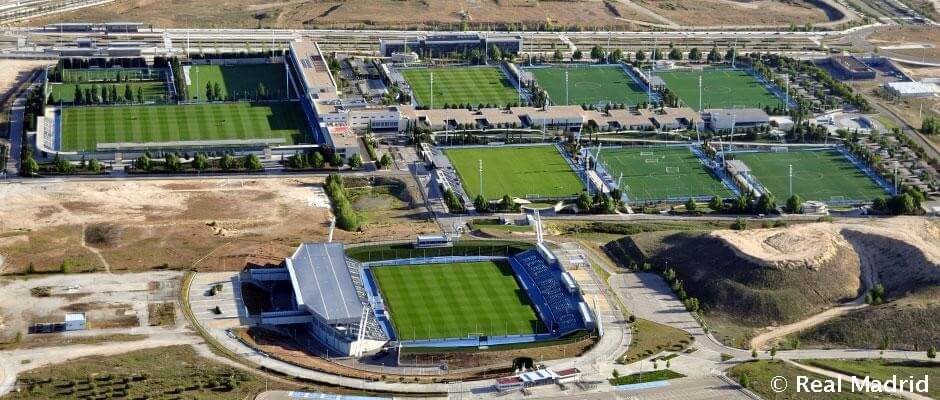
Raúl. Casillas. Carvajal. Valverde. Seventy years of consistent production from a single postcode in Madrid.
La Fábrica ranks second globally in the CIES Big 5 criterion, with 35 academy-trained players active in Europe’s top five leagues. Unlike La Masia, which develops players for a specific style, La Fábrica develops players capable of adapting to any system. That flexibility is the Real Madrid trademark. Achraf Hakimi and Álvaro Morata were both developed at Valdebebas before generating major transfer fees. Federico Valverde joined the academy at 16 from Uruguay, a direct example of La Fábrica’s international reach. Real Madrid is the only major club to have consistently fielded both record-fee transfers and homegrown players in Champions League finals. In the same squad. This is structurally different from how English clubs currently operate: top Premier League sides typically either buy or develop, rarely both at the same time at the very highest level.
Important note: the camps available through Looking For Soccer are organised by the Real Madrid Foundation, the club’s charitable arm, not by the La Fábrica sporting department. These are two distinct structures. What your child gets is the Real Madrid environment, values, and facilities and not access to the professional academy. Looking For Soccer offers Real Madrid Foundation camps in Portugal for all levels.
4. PSG Campus — Paris Saint-Germain
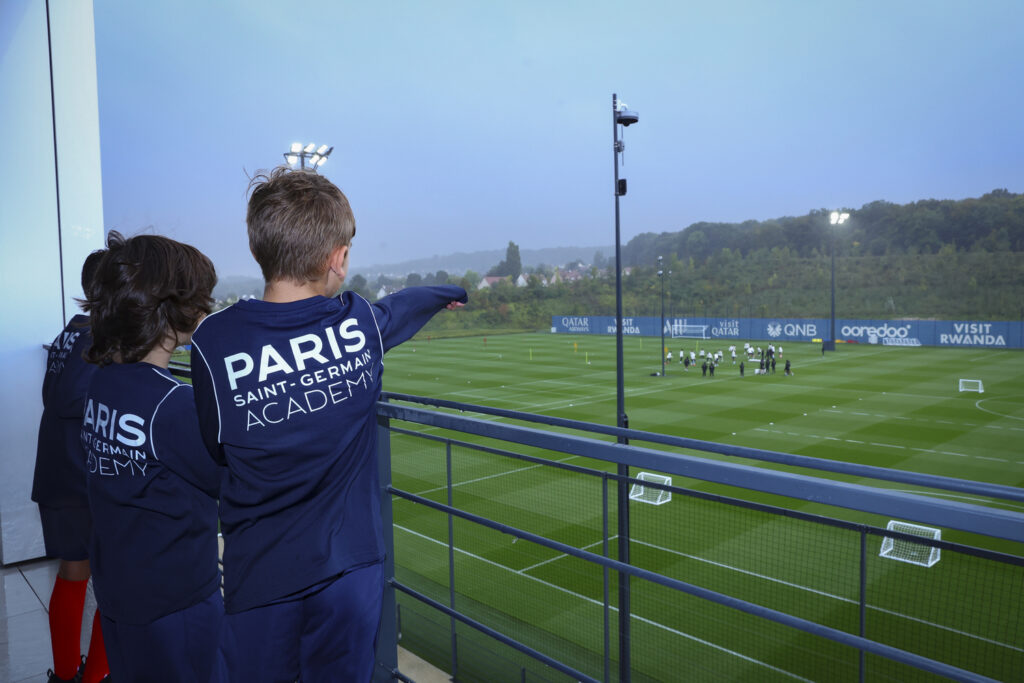
Warren Zaïre-Emery became the youngest player in PSG history at 16 years, 4 months, and 29 days. He won the Champions League with the club in 2025. He was born and raised near Paris, and has never played for another club.
PSG ranks third in Europe in the CIES Big 5 classification, with 31 academy-trained players active in the top five leagues. The campus, now at Poissy, has 14 pitches, a sports clinic, a 5,000-seat stadium, and its own school. 120 “Titis parisiens” have played in official PSG matches, 102 of them in Ligue 1. Kingsley Coman scored the winning goal in the 2020 Champions League final. Christopher Nkunku won the Bundesliga’s best player award in 2021-2022. In 2025-2026, PSG completed a historic treble, winning the professionals’ title alongside the U19 championship for the third consecutive year and the U17 title. France’s dominance of the current world game is not accidental : it is a structural output of academies like PSG’s operating at the highest level for over two decades. Looking For Soccer offers a PSG Academy camp for all levels at Poissy during summer holidays.
5. Stade Rennais Academy
The fourth-best football academy in the world according to CIES 2026 is not in Spain, England, or Germany. It is in Brittany, France.
The Stade Rennais academy ranks fourth globally in the CIES Big 5 criterion, with 29 players trained there currently active in Europe’s top five leagues. Four of the most valuable young players in European football (Eduardo Camavinga, Ousmane Dembélé, Mathys Tel and Désiré Doué) all developed from the same academy. This result is a direct challenge to the English academy model’s assumption that Category 1 investment is sufficient to produce world-class output. Rennes operates on a fraction of Chelsea or Manchester City’s budget. It ranks above both.
6. De Toekomst — Ajax Amsterdam

In 1995, Ajax won the Champions League with seven academy graduates in the starting eleven. Several Premier League academy directors have cited De Toekomst as the direct inspiration for their curriculum redesign post-EPPP reform.
Ajax ranks fifth globally in the CIES Big 5 criterion. The De Toekomst philosophy runs on the TIPS model: Technique, Intelligence, Personality, Speed. The same 4-3-3, the same pressing and possession system, is taught from U9 to the first team without interruption. Over 85 former De Toekomst graduates have represented the Dutch national team. Transfers of Ajax alumni have generated over 1.5 billion euros in total. The TIPS model was directly cited by several Premier League Category 1 academy directors when redesigning their U12-U16 curricula after the EPPP was introduced in 2012.
7. Cobham — Chelsea FC
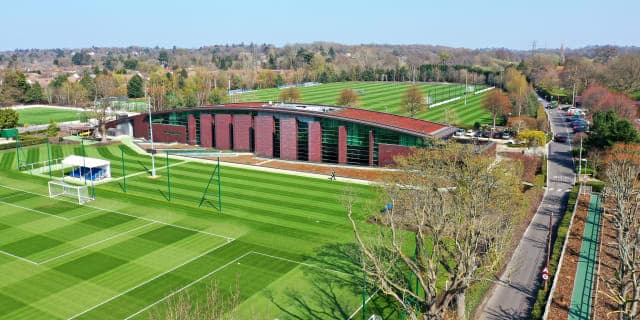
The only club in this list that sits in both the CIES global top ten and the English EPPP Category 1 system. A bridge between two models.
Chelsea ranks sixth globally in the CIES Big 5 criterion and third in Europe for decade-long transfer revenue from academy graduates: 442 million euros according to the CIES April 2026 study. In 2024, ten Cobham graduates made their Chelsea first-team debut, several becoming regular members of Enzo Maresca’s squad. Chelsea’s domestic Category 1 status means the club can sign players from age 6, recruit within a 90-minute travel radius, and access the full EPPP support infrastructure. The Cobham training ground in Surrey operates in parallel to that system, with its own performance science, medical, and video analysis departments. The result is a club that genuinely bridges European development thinking and the English professional structure. Looking For Soccer offers a Chelsea FC Foundation camps in Winchester, from development to intensive.
8. City Football Academy — Manchester City
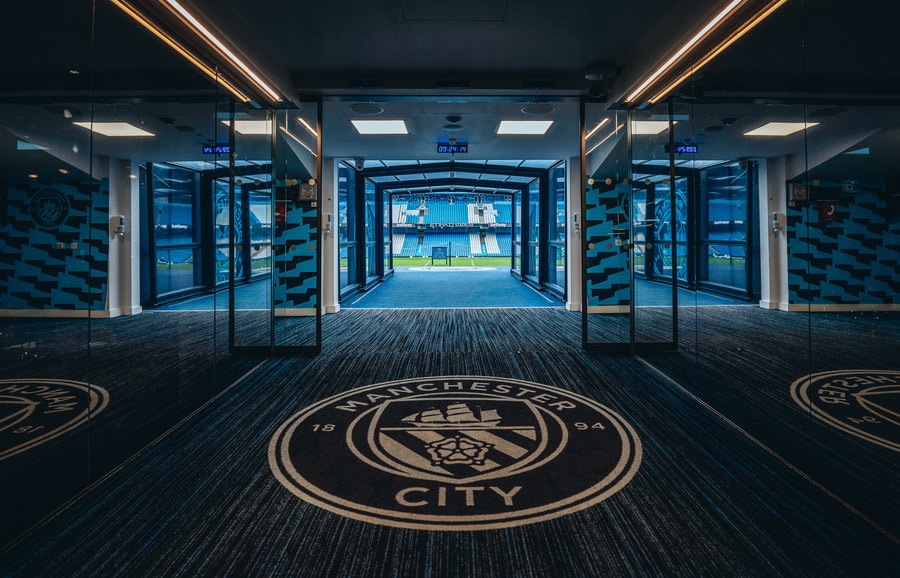
Manchester City leads the English EPPP rankings by the value of academy graduates currently under contract. Their total exceeds that of any other English club.
Manchester City ranks in the global top 10, eighth equal according to CIES 2026. According to CIES Weekly Post 531, City leads the English rankings with academy graduates under contract carrying the highest combined transfer value of any English club. The City Football Academy, adjacent to the Etihad Stadium, is a Category 1 facility with natural grass pitches, gyms, recovery pools, video analysis suites, and an integrated school. Pep Guardiola’s positional play model has been transmitted down to the U9s. Looking For Soccer offers a Manchester City camp for boys and girls, all levels.
Can my child train at one of these academies without being recruited?
Yes, partially. Professional academies are closed to outside applications. Entry happens through scouting. But the major clubs run parallel camp programmes open to all, coached by the same educators and in equivalent facilities. That is precisely what Looking For Soccer curates and offers to families. For the full selection of world-class programmes, explore our best football camps in the world guide.
World’s Best Football Academies: Here’s What to remember
The world’s best football academies are not judged on a single player or a single season. They are judged on decades of consistent production, a transmissible method, and alumni who continue to dominate professional football long after leaving the academy. Benfica, Barcelona, Real Madrid, PSG, Rennes, Ajax, Chelsea, and Manchester City each meet that standard, with different philosophies and different histories. What unites them is a shared conviction: the best players are built, not bought.
Frequently Asked Question about the Best football academies in the world
What is the best football academy in the world?
According to the CIES Football Observatory January 2026 ranking, FC Barcelona leads the Big 5 criterion with 40 academy-trained players active in Europe’s top five leagues, and graduates valued at a combined 738 million euros. On the global criterion covering 49 professional leagues, Benfica leads with 93 active graduates. Barcelona dominates European elite football; Benfica dominates in global volume.
How does a professional football academy work?
A professional academy takes players from approximately age 11 to 18, with a daily programme combining football training, adapted schooling, and residential accommodation. In England, academies are structured under the EPPP from Category 4 to Category 1. For more detail, read our guide on how professional football academies work.
At what age can my child enter a professional football academy?
In England, EPPP Category 1 clubs can sign players from age 6. The standard entry age for most certified academies is around 11 (U12 category). The most favourable scouting window is typically between ages 11 and 14. Read our guide on what age to join a professional football academy.
What is the difference between a football academy and a football boarding school?
A professional academy is integrated into a club: players are under contract and the goal is to produce professionals for the first team or transfer market. A football boarding school is a private structure combining intensive football and schooling, without a mandate to supply a specific club.
Can my child train at one of these academies without being recruited?
Not inside the professional academy itself. But the major clubs run parallel open camp programmes coached by the same staff and using equivalent facilities. PSG, Manchester City, Chelsea, and FC Barcelona all offer these programmes through Looking For Soccer.
You might also enjoy: