Best Football Academies in France 2027: The Top French Clubs
France is, right now, one of the most productive football nations on the planet. Eleven French clubs sit in the global top 50 for academy output according to the CIES Football Observatory, a research body that tracks how many academy-trained players are currently active in Europe’s top five leagues. Three of those clubs (PSG, AS Monaco, and Stade Rennais) are in the global top 25. For British families weighing up a football development path abroad, France sits right on the doorstep, and it’s one of the strongest options on the table, not just because of the football itself, but because of where the access actually exists. Looking For Soccer, the reference platform for booking football camps at elite clubs, has used the CIES Football Observatory ranking as the backbone of this selection.

Why France, and which academies matter ?
French academy football is judged differently depending on the lens. Domestically, the French Football Federation (FFF) runs its own annual evaluation of all 33 professional academies (Ligue 1, Ligue 2, and National), scoring each on professionalisation, first-team playing time, national team call-ups, academic results, and European representation, broadly comparable in spirit to England’s own EPPP categorisation system. Internationally, the CIES ranking takes a different approach entirely. It simply counts how many academy graduates from each club are currently playing in Europe’s top five leagues. The two rankings don’t always agree, and that’s useful context, not a contradiction.
Here’s what matters for a British family: PSG ranks third in the world on the CIES Big 5 criterion, ahead of Stade Rennais (fourth) and well ahead of Monaco. That single fact tells you which French academy currently produces the most players who go on to play at the highest professional level in Europe, a level of output that very few English Category 1 academies can match.
1. The Paris Saint-Germain (PSG) Academy
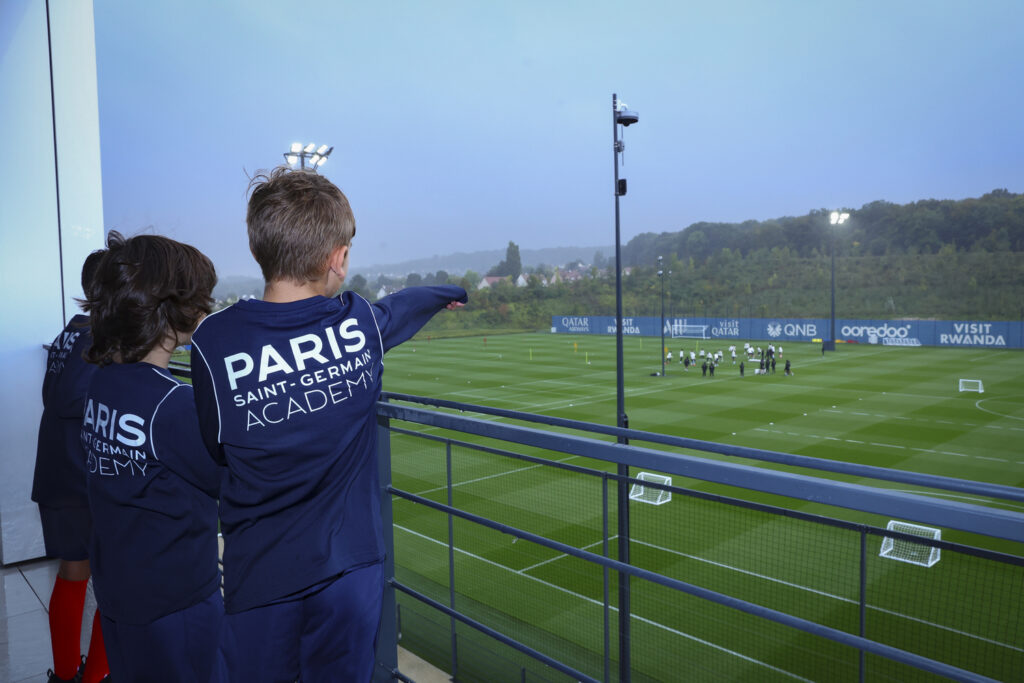
The first French academy in this list with a camp programme accessible to international families through Looking For Soccer.
PSG’s academy, now based at the Poissy campus, includes 14 pitches, a sports clinic, a 5,000-seat stadium, and its own school. Warren Zaïre-Emery became the youngest player in PSG’s history at 16 years, 4 months, and 29 days, and won the Champions League with the club in 2025. Kingsley Coman scored the winning goal in the 2020 Champions League final. In 2025-2026, PSG completed a historic treble across its professional, U19, and U17 teams. Looking For Soccer offers a PSG Academy football camp in Poissy, on the same campus, to help your child train on the same pitch as the Parisian club’s players.
2. The Stade Rennais Academy
Fourth-ranked academy in the world by CIES standards, and the FFF’s own top-ranked academy domestically.
Eduardo Camavinga (Real Madrid), Ousmane Dembélé (PSG), Mathys Tel (Bayern Munich), Désiré Doué (PSG): four of the most valuable young players in European football, all developed at the same academy in Brittany, operating on a fraction of the budget of clubs like PSG, Chelsea, or Manchester City.
3. The AS Monaco Academy
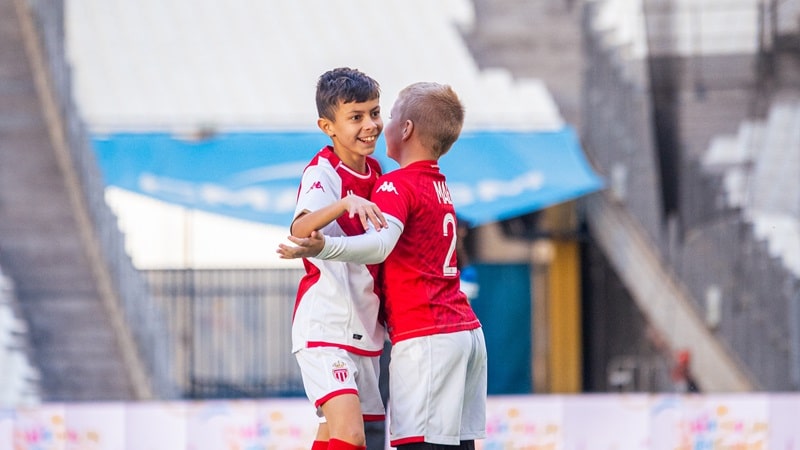
A 50-year-old academy that produced five World Cup winners. The only French club to have done so.
Monaco’s academy was founded in 1975 and is based in La Turbie, using the same training facilities as the professional squad. Four 1998 World Cup winners trained here: Thierry Henry, Emmanuel Petit, Lilian Thuram, and David Trezeguet. Kylian Mbappé, 2018 World Cup winner, also came through the academy before moving to PSG for 180 million euros. In 2026, the academy celebrated its 50th anniversary. The club recently launched an Elite group to better structure the transition from the academy to the professional squad. Monaco’s distinctive tax status has historically attracted families from across Europe, including the UK, giving it a broader international recruitment base than most French clubs. It ranks 25th in the world in the CIES 2025 ranking.
4. The Olympique Lyonnais Academy
Fourth-ranked academy in France according to the 2024-2025 FFF evaluation, after years spent disputing the podium with the country’s biggest clubs.
For years, Olympique Lyonnais held a reputation as one of the absolute benchmarks of French football development, regularly occupying the top two spots in the FFF ranking. For 2024-2025, the club dropped to fourth place, overtaken by PSG, but remains one of the most respected academies in the country, particularly strong on first-team playing time given to its graduates. Houssem Aouar, Alexandre Lacazette, Maxence Caqueret: all academy graduates who went on to establish themselves in Ligue 1 or abroad.
5. The AC Ajaccio Academy
Top-ranked Ligue 2 academy in France, with a particularly strong academic track record.
AC Ajaccio leads Ligue 2 on the development side, anchored by an academic support programme rated among the best in French professional football across all divisions. The Corsican club proves that a smaller budget than the Ligue 1 giants doesn’t prevent rigorous, structured development.
6. The FC Lorient Academy
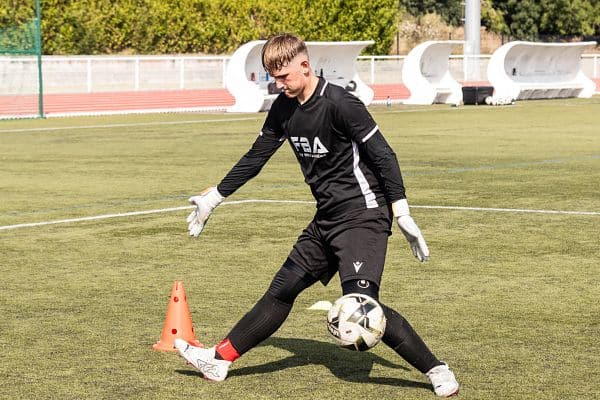
Second-ranked Ligue 2 academy in France, and a club historically known for developing young talent.
FC Lorient has built a genuine reputation as a development club over the years, with an academy that continues to produce players who quickly break into the first team. The Brittany club has stayed consistent on this front season after season, regardless of which division it’s playing in.
7. The SM Caen Academy
Third-ranked Ligue 2 academy in France.
Stade Malherbe de Caen rounds out the Ligue 2 podium, with an academy recognised for the quality of its technical coaching. The Normandy club has produced several promising young players over the years, confirming the strength of its development pipeline.
8. The FC Metz Academy

Fourth-ranked Ligue 2 academy in France, and one of the most consistently productive development clubs outside the top division.
FC Metz has built a reputation as a reliable development club, producing quality players despite operating with far smaller resources than the Ligue 1 giants. The club particularly stands out on national team call-ups and European representation, evidence that its academy regularly produces players capable of competing beyond French borders. Looking For Soccer offers an intensive, advanced FC Metz camp in the Lorraine region.
How much does a football academy actually costs in France ?
It’s worth clearing up a common misunderstanding. Joining a professional academy in France costs families nothing, much like joining a Category 1 academy in England. Players sign a training contract with the club, which covers housing, schooling, and coaching, and in many cases pays the player a stipend depending on age and contract terms. It is not a programme you pay to join, it’s a selection process.
What does carry a cost is a camp that lets your child train in the environment of a major French club without entering its academy system. Looking For Soccer offers camps at two clubs in this selection: PSG Academy and FC Metz. Both are run by the clubs’ own coaches and represent a genuine, accessible way to experience elite French football development without going through the formal scouting process. It can be a genuinely useful option for players released from an English academy and who want to keep developing at a high level.
Looking for the right programme for your child?
Finding the right camp or programme at an elite club is not always straightforward, especially when organising from abroad. That’s exactly what Looking For Soccer is here for. Our team personally selects and evaluates every programme based on coaching quality, infrastructure, and fit with your child’s profile. We work with families from across the world, our team is available 7 days a week and as of today, more than 490+ families left us reviews on Trustpilot.
Frequently Asked Questions about the Best football academies in France
What is the best football academy in France?
It depends on the measure. The French Football Federation’s own annual evaluation ranks Stade Rennais first domestically, ahead of PSG and AS Monaco. The international CIES ranking, which counts academy graduates currently active in Europe’s top five leagues, places PSG third in the world, ahead of Rennes in fourth.
How does France compare globally for football development?
Very well. Eleven French clubs appear in the CIES global top 50 academy ranking: PSG (3rd), Rennes (4th), Lyon (11th), Toulouse (14th), Le Havre (15th), Monaco (25th), Nice (27th), Lille (30th), Nantes (32nd), Lens (41st), and Metz (43rd). For the full global picture, including academies in Spain and Portugal, see our guide to the best football academies in the world.
Can my child train at a French academy without being recruited?
Not inside the academy itself, which is closed to outside applications, much like an English Category 1 academy. But major clubs run parallel camp programmes open to all players, coached by the same staff and using equivalent facilities. PSG offers this through Looking For Soccer.
Does it cost money to join a professional academy in France?
No. Academy admission happens through scouting and selection, not payment. The club covers housing, schooling, and training. What costs money are camps that offer access to a club’s environment without academy enrolment.
You might also enjoy: