
Best Football Academies in England 2026: Top Premier League Picks
Chelsea. Arsenal. Manchester City. Manchester United. Liverpool. Five Category 1 academies that between them have produced Bukayo Saka, Cole Palmer, Jude Bellingham, Declan Rice, Kobbie Mainoo, Reece James, and Trent Alexander-Arnold in the space of a single generation. England’s academy system, restructured by the EPPP in 2012, now ranks among the most productive in the world, and the data to prove it has never been more detailed. Looking For Soccer, the reference platform for booking football camps at elite clubs, has used three recent rankings to structure this guide: Training Ground Guru’s Academy Productivity Rankings (September 2025), the CIES Football Observatory (January and April 2026), and the EPPP classification system.

How are the best academies in England assessed?
Unlike France, which publishes an official FFF ranking of its academies each June, England has no single institutional ranking. Three complementary sources provide a reliable picture.
Training Ground Guru (TGG) measures academy productivity by counting graduates who made at least one appearance in the top five English or European leagues in a given season, the only publicly available UK-based ranking built on actual professional output. The CIES Football Observatory measures the combined transfer value of graduates still under contract, and the decade-long revenue generated from selling graduates. The EPPP system classifies academies from Category 4 to Category 1, with a minimum annual budget of £2.5 million for Category 1, the right to recruit nationally from U15 upwards, and participation in the Premier League 2 and Under-18 Premier League. As of August 2025, there are 29 Category 1 academies in England, including eight Championship clubs.
| Club | TGG Rank 2025 | CIES Graduate Value | CIES Decade Revenue | CIES Global Rank |
|---|---|---|---|---|
| Chelsea FC | 1st (3rd year running) | ~£193m | €366m | 6th globally |
| Manchester City | Top 5 | ~£248m (1st in England) | €318m | 8th globally |
| Arsenal | 2nd | ~£204m | Top 10 English | ~48th globally |
| Manchester United | 3rd | Top 5 English | Top 10 English | Top 100 globally |
| Liverpool | Top 10 | Top 5 English | Top 10 English | 75th globally |
England’s best football academies
1. Chelsea FC Academy (Cobham)
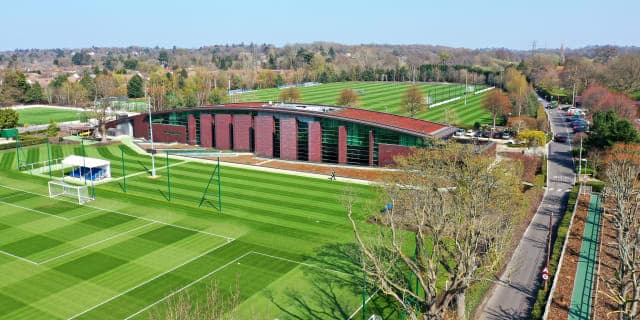
England’s most productive academy three years running, according to Training Ground Guru. Sixth in the world by CIES Big 5 standards. And a list of first-team graduates that hasn’t stopped growing.
John Terry. Reece James. Levi Colwill. Josh Acheampong. Tyrique George. In 2024, ten Cobham graduates made their Chelsea first-team debut, several becoming permanent members of Enzo Maresca’s squad. The academy generated €366 million in transfer revenue over the last decade, third globally, behind only Benfica and Ajax. 25 Chelsea-trained players are currently active in Europe’s top five leagues according to CIES January 2026 data. What separates Cobham from other elite English academies is a deliberate and sustained internal promotion philosophy. Mason Mount, Connor Gallagher, Tammy Abraham: graduates sold with meaningful profit margins, while the production line keeps running. Enzo Maresca specifically cited his knowledge of the academy during his appointment process in 2024. Chelsea also bridges European development thinking and the English professional structure, one of the only clubs in this list that sits in both the global CIES top ten and the EPPP Category 1 system at the highest level.
Would you like your child to train in the Chelsea FC environment? Looking For Soccer offers football camps ranging from advanced to intensive, with a dedicated goalkeeping option.
2. Manchester City Football Academy
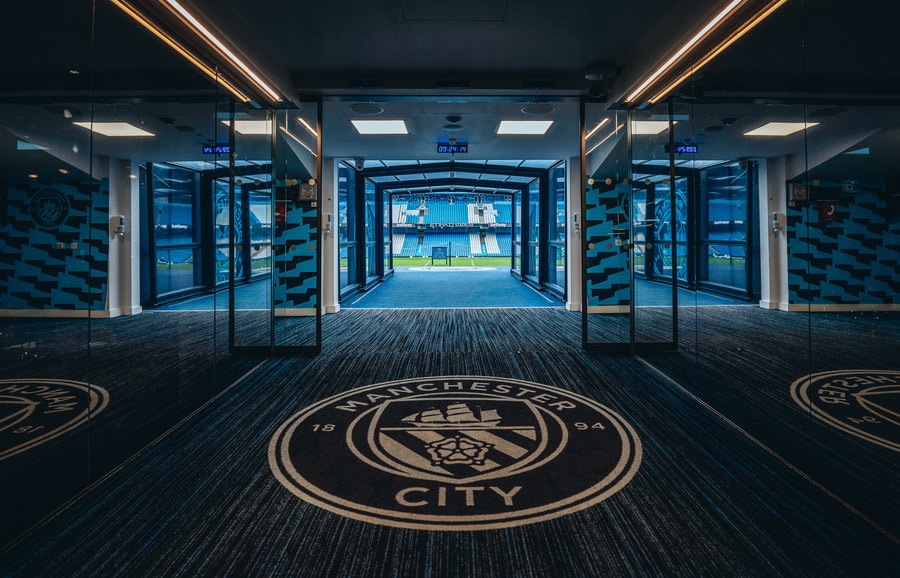
England’s most valuable academy by graduate transfer value, with approximately £248 million in academy-trained players still under contract. Second globally, behind only Barcelona’s La Masia.
Phil Foden is the clearest symbol of what the City Football Academy produces when it backs its own. Born in Stockport, a City fan from childhood, he joined the academy at 6, won the U17 World Cup Golden Ball in 2017, and has made over 300 appearances for the first team. Cole Palmer was sold to Chelsea for £40 million and became one of the best performers across the entire Premier League, a sale that looks increasingly difficult to justify in retrospect. Jadon Sancho left for Borussia Dortmund via an £85 million transfer. Jeremie Frimpong signed for Liverpool in May 2025 after developing at Celtic and Bayer Leverkusen. The City Football Academy, adjacent to the Etihad Stadium, is a Category 1 facility with natural grass pitches, gyms, recovery pools, video analysis suites, and an integrated school. Pep Guardiola’s positional play model has been transmitted all the way to the U9s, the same philosophy that has won four Premier League titles. For families whose child is in the English academy system, understanding what City does differently at development level is worth reading alongside our guide on football academy options for secondary school-age players in England.
Would you like your child to train like the Manchester City players? Looking For Soccer offers a dedicated football camp at the club for girls and boys of all ability levels.
3. Arsenal FC Academy (Hale End)

England’s second most productive academy (TGG 2025), with £204 million in academy graduate value. And a current first-team squad that makes the case better than any statistic.
Bukayo Saka joined Hale End at age 7. He is now one of the best players in the world and one of the most consistent performers in the Premier League. Ethan Nwaneri became the youngest player in Premier League history in October 2022 and is now a first-team regular. Myles Lewis-Skelly, aged 18, is Arsenal’s most valuable academy graduate by current CIES estimate. This generation is not accidental. It is the result of Mikel Arteta’s systematic academy integration policy since 2019 and of a recruitment philosophy at Hale End that prioritises long-term development over short-term results. Arsenal also learned a costly lesson with Eberechi Eze, released early over defensive concerns, subsequently purchased back for a significant fee, and has adjusted accordingly.
Is your child a fan of the Gunners? Why not treat them to a camp at one of the venues around London?
4. Manchester United Academy (Carrington)
England’s third most productive academy (TGG 2025), and the academy that defined what professional player development could look like in English football.
In 1992, Sir Alex Ferguson aligned six academy graduates, David Beckham, Ryan Giggs, Paul Scholes, Nicky Butt, Gary and Phil Neville, to win the league title. Alan Hansen declared you couldn’t win anything with kids. United proved him wrong. The Class of 92 became the blueprint for an entire generation of academy football globally. Today, Kobbie Mainoo and Alejandro Garnacho represent the current generation: both Carrington products, both established first-team starters under Rúben Amorim. Marcus Rashford, who came through the academy and became England’s top scorer at Euro 2020, is the most prominent graduate of the recent era. Carrington is a Category 1 facility in Greater Manchester with modern infrastructure.
5. Liverpool FC (Kirkby)

75th globally by CIES, but three academy graduates contributed directly to Liverpool’s 2024-25 Premier League title, and Trent Alexander-Arnold is the clearest proof that CIES metrics don’t capture everything.
Alexander-Arnold left Liverpool on a free transfer to join Real Madrid. Under CIES methodology, a player who leaves on a free generates no transfer revenue, meaning his entire development value is statistically invisible in the decade revenue ranking. That’s the limitation of the metric, not of the academy. Curtis Jones, Jarell Quansah, and Alexander-Arnold all played meaningful roles in the 2024-25 title. Klopp finished the 2024 League Cup final with five players aged 21 or under on the pitch. Kirkby, Liverpool’s Category 1 academy facility, has been extensively redeveloped. The club’s commitment to integrating youth has been consistent across multiple managers. Liverpool ranks 75th globally according to CIES, below what its domestic output suggests, largely because its best graduates have historically remained at the club rather than being traded early.
Looking For Soccer offers advanced and intensive camps at Liverpool FC.
Can my child train at one of these academies without being recruited?
Professional academies are closed to outside applications, entry happens through scouting. But major clubs run parallel camp programmes open to all players, coached by the same staff and using equivalent facilities. Looking For Soccer offers camps at all the clubs in this selection, with the exception of Manchester United. To see how English clubs’ academy centres compare with those in other countries, explore our best football camps in the world guide. And if you’re unsure which camp to choose from the range on offer, our team is on hand to answer any questions you may have.
Final thoughts
Chelsea leads England on productivity. Manchester City leads on current graduate value. Arsenal leads on first-team integration right now. Manchester United carries the deepest historical legacy. Liverpool proves that CIES rankings don’t always tell the full story. These five academies together have produced the generation that took England to back-to-back European Championship finals. For a broader perspective on how English academies compare globally, read our guide to the best football academies in the world.
Frequently Asked Questions about Best football academies in England
What is the best football academy in England?
According to Training Ground Guru’s Academy Productivity Rankings (September 2025), Chelsea is England’s most productive academy for the third consecutive year, ahead of Arsenal and Manchester United. By CIES graduate transfer value, Manchester City leads in England with approximately £248 million. Both measures are complementary, they assess different dimensions of what makes a great academy.
What is the EPPP, and how does it classify English academies?
The Elite Player Performance Plan, introduced in 2012, classifies every professional academy from Category 4 to Category 1. Category 1 requires a minimum budget of £2.5 million per year, full-time UEFA-licensed coaches, integrated schooling, and competes in the Premier League 2 and Under-18 Premier League. As of August 2025, there are 29 Category 1 academies in England, including eight Championship clubs.
What happens when a player is released from an English academy?
Approximately 90% of academy players are released before 18. Being released is not the end of the pathway. Many players develop successfully through lower-league clubs, non-league football, or international sport-études programmes that provide continued high-level coaching in a structured environment. Our article on football boarding schools covers some of these alternatives.
You might also enjoy: