
After Soccer Camp: How to Extend the Benefits at Home
Votre enfant revient tout juste de son stage de football, des étoiles plein les yeux et une motivation débordante. Pendant une ou deux semaines, il a vécu comme un pro : entraînements intensifs, conseils d’experts, camaraderie sur le terrain. Mais voilà, les vacances se terminent, l’école reprend… et vous vous demandez comment faire durer cette flamme. Bonne nouvelle : avec quelques habitudes simples et un accompagnement adapté, les bénéfices d’un stage peuvent se prolonger bien au-delà du dernier coup de sifflet. Une étude publiée dans PLOS ONE en 2017 a d’ailleurs démontré que l’activité physique régulière améliore non seulement les capacités sportives, mais aussi les fonctions cognitives et les résultats scolaires. De quoi vous convaincre de maintenir le rythme à la maison.

Pourquoi les acquis d’un stage s’évaporent-ils si vite ?
On connaît tous ce phénomène : votre enfant rentre métamorphosé, puis deux semaines plus tard, il semble avoir tout oublié. Ce n’est pas qu’il manque de volonté. Le cerveau et le corps fonctionnent selon un principe simple : ce qui n’est pas répété finit par s’effacer. Les neurologues appellent ça la “courbe de l’oubli”. Pour ancrer durablement un geste technique ou un réflexe tactique, la répétition espacée est indispensable.
Durant un stage d’entraînement élite, les jeunes joueurs bénéficient de 20 à 30 heures de football concentrées sur une semaine. Cette immersion crée des connexions neuronales fortes, mais fragiles. Sans stimulation régulière dans les semaines qui suivent, ces connexions s’affaiblissent. C’est pourquoi les meilleurs coachs insistent : le vrai travail commence après le stage.
Créer une routine d’entraînement réaliste
Inutile de transformer votre jardin en centre d’entraînement professionnel. L’objectif n’est pas de reproduire l’intensité du stage, mais de maintenir une pratique régulière et plaisante. Trois à quatre séances de 20-30 minutes par semaine suffisent amplement pour un enfant entre 8 et 14 ans.
Le programme type d’une semaine
Voici un exemple de planning adapté au quotidien d’un enfant scolarisé. Le lundi, concentrez-vous sur la technique individuelle : jonglage, contrôles, passes contre un mur. Comptez 25 minutes maximum. Le mercredi après-midi, si possible, organisez un petit match avec des copains ou au club. Rien de tel que le jeu réel pour appliquer ce qui a été appris. Le vendredi ou samedi, travaillez la condition physique de manière ludique : courses en dribble, slaloms entre des plots, exercices de coordination. Et le dimanche ? Repos ou match en famille dans le parc. Le plaisir reste le moteur principal de la progression chez les jeunes.
Les exercices techniques à reproduire chez soi
Pendant les stages de football en France comme à l’étranger, certains exercices reviennent systématiquement car ils forment la base de tout bon joueur. Le jonglage, d’abord. Demandez à votre enfant de battre son record personnel chaque semaine. C’est motivant et ça développe le toucher de balle. Ensuite, les passes murales : 50 passes du pied droit, 50 du gauche, en variant les distances. Pour les gardiens de but, des exercices de plongeons sur matelas ou de réflexes avec une balle de tennis font des merveilles.
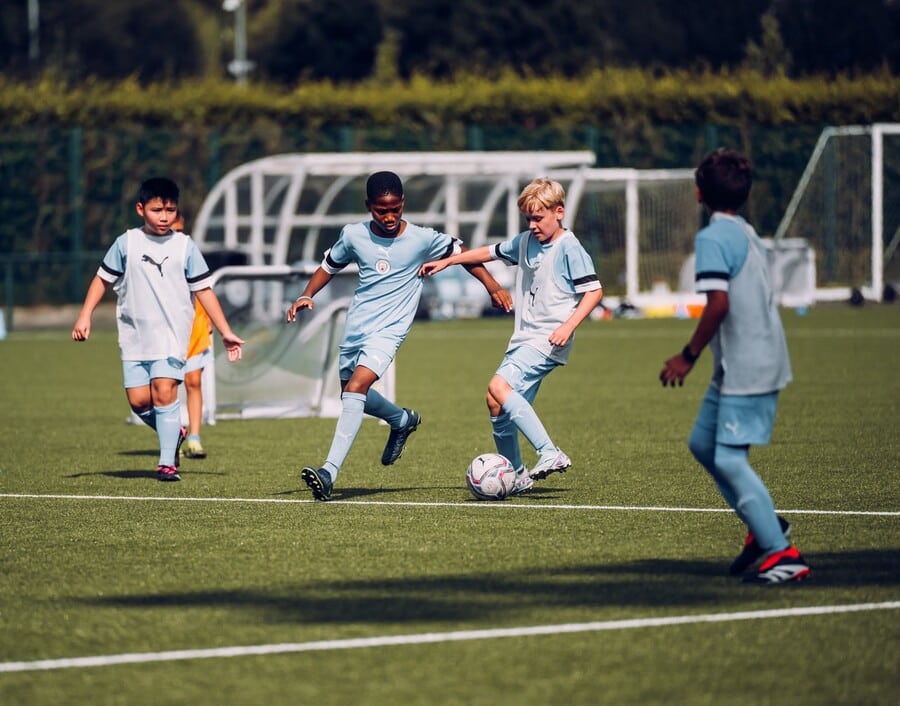
Nourrir le corps et l’esprit du jeune footballeur
La nutrition sportive ne s’arrête pas aux portes du stage. Ce que votre enfant mange au quotidien influence directement son énergie, sa récupération et sa capacité de concentration. Les clubs professionnels l’ont bien compris : au PSG ou à Manchester City, les jeunes des académies suivent des programmes nutritionnels personnalisés.
À la maison, quelques principes simples font la différence. Un petit-déjeuner complet avec des glucides complexes (pain complet, flocons d’avoine) avant l’école. Une collation équilibrée après l’entraînement : banane + yaourt ou barre de céréales maison. Et le soir, des protéines pour la récupération musculaire (poulet, poisson, œufs) accompagnées de légumes. Évitez les sodas et les sucreries excessives qui provoquent des pics d’énergie suivis de coups de fatigue.
La préparation mentale mérite aussi votre attention. Un enfant qui doute de lui progressera moins vite qu’un enfant confiant. Encouragez-le à visualiser ses réussites, à se fixer des objectifs atteignables, à accepter l’échec comme partie intégrante de l’apprentissage. Les stages de haut niveau intègrent désormais systématiquement ces dimensions psychologiques.
Utiliser la technologie intelligemment
Les applications de football peuvent devenir de précieux alliés. Certaines proposent des exercices quotidiens personnalisés, d’autres permettent de filmer et d’analyser les gestes techniques. Votre enfant peut ainsi comparer son mouvement à celui de ses idoles et identifier ce qu’il doit améliorer.
YouTube regorge aussi de tutoriels gratuits. Mais attention à ne pas tomber dans l’excès : 15 minutes de vidéo suivies de 30 minutes de pratique valent mieux que deux heures passées devant l’écran. L’équilibre reste la clé. Et si votre enfant a participé à un stage foot et anglais, pourquoi ne pas regarder des analyses de matchs en version originale ? Double bénéfice garanti.
Garder le lien avec l’expérience du stage
Votre enfant a noué des amitiés pendant son séjour ? Encouragez-le à rester en contact avec ses camarades de stage. Ces relations créent une émulation positive. Ils peuvent s’échanger des vidéos d’exercices, se défier à distance sur leurs records de jonglage, ou simplement discuter de leur passion commune.
Si le stage proposait un rapport de progression ou un certificat, affichez-le dans sa chambre. Ce rappel visuel renforce la motivation. Certains stages du PSG ou de Manchester City fournissent des bilans détaillés avec les points forts et les axes d’amélioration. Ce document devient alors une feuille de route pour les mois à venir.
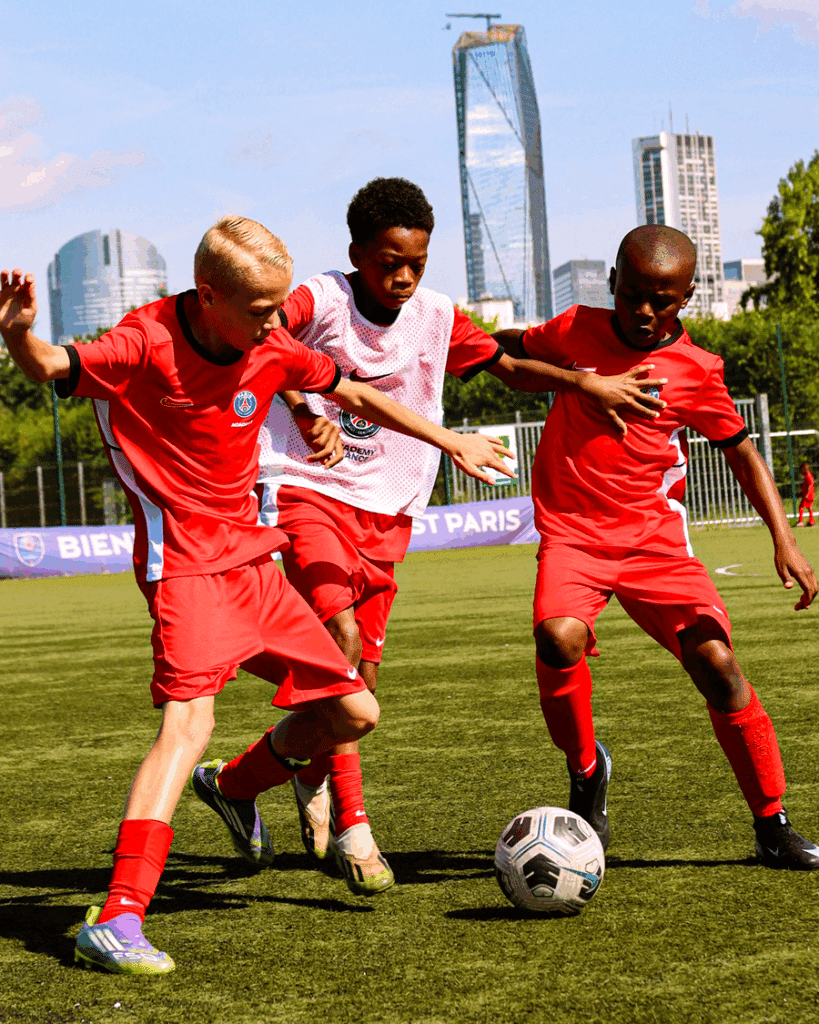
Préparer le prochain stage dès maintenant
La perspective d’un nouveau stage agit comme un puissant moteur de motivation. Que ce soit pour l’été prochain, les vacances de Toussaint ou celles de Pâques, planifier ensemble le prochain rendez-vous donne un horizon à atteindre. Votre enfant s’entraînera d’autant plus sérieusement qu’il sait pourquoi il le fait.
Pourquoi ne pas varier les expériences ? Après un stage en France, découvrir un camp en Angleterre ou en Espagne apporte une richesse supplémentaire. Chaque club a sa philosophie, sa méthodologie. Alterner les approches élargit la palette technique et tactique de votre enfant.
FAQ : Vos questions sur l’après-stage
Combien de temps mon enfant doit-il s’entraîner chaque semaine après un stage ?
Pour un enfant de 8 à 14 ans, 3 à 4 séances de 20-30 minutes par semaine suffisent. L’important est la régularité plutôt que l’intensité. Au-delà, vous risquez la lassitude ou la blessure.
Mon enfant a perdu sa motivation depuis son retour, que faire ?
C’est normal après l’intensité d’un stage. Variez les exercices, invitez des amis pour des petits matchs, regardez ensemble des vidéos de ses joueurs préférés. Et surtout, ne mettez pas trop de pression. Le plaisir doit rester au centre.
Faut-il acheter du matériel spécifique pour s’entraîner à la maison ?
Quelques cônes (ou bouteilles d’eau), un ballon adapté à son âge et un mur suffisent pour commencer. Vous pouvez ajouter progressivement une échelle de rythme ou des petits buts pliables si l’intérêt se confirme.
À quelle fréquence mon enfant devrait-il participer à des stages ?
Un ou deux stages par an représentent un bon rythme. Trop de stages sans pratique régulière entre eux serait contre-productif. L’idéal : un stage l’été et éventuellement un stage court pendant une autre période de vacances.
Comment savoir si mon enfant progresse réellement ?
Fixez des objectifs mesurables : nombre de jongles, précision des passes, temps sur un parcours de slalom. Filmez-le régulièrement pour comparer. Et observez son comportement en match : est-il plus confiant ? Prend-il plus d’initiatives ?
Les stages intensifs sont-ils adaptés à tous les enfants ?
Non. Les stages intensifs ou de haut niveau s’adressent aux enfants déjà licenciés et pratiquant régulièrement. Pour un débutant ou un joueur occasionnel, privilégiez les stages de loisir ou de perfectionnement classiques.
Mon enfant veut devenir professionnel. Un stage peut-il l’aider à être repéré ?
Les stages ne sont généralement pas des sessions de détection, mais ils permettent de progresser significativement et parfois de se faire remarquer. Les détections officielles passent par d’autres canaux, mais un bon niveau acquis en stage peut ouvrir des portes.
Le retour de stage n’est pas une fin, c’est un nouveau départ. Avec une routine adaptée, une alimentation équilibrée et une motivation entretenue, votre enfant peut transformer cette semaine exceptionnelle en progression durable. Et qui sait, peut-être le reverrez-vous bientôt fouler les pelouses d’un stage Arsenal, du FC Barcelone ou de la Juventus, prêt à franchir un nouveau cap.