
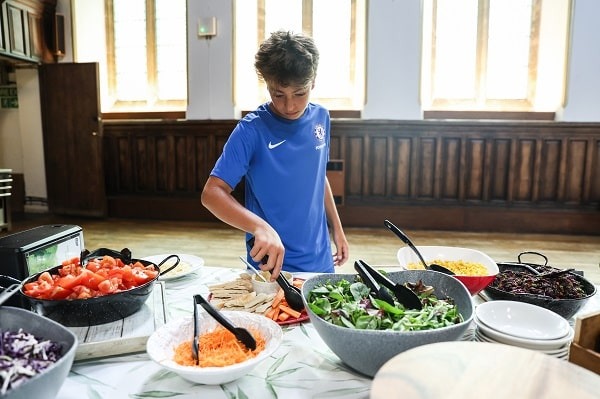
Why does one player finish a match strong while another is out of steam by the 60th minute? Why does one recover overnight while another carries fatigue for three days? Training explains part of the answer. Nutrition explains the rest. What your child eats every day directly shapes their energy on the pitch, their ability to recover, their focus during a match, and even their risk of injury. This guide is provided by Looking For Soccer, the leading website for booking football training camps at premium clubs, and covers the basics of nutrition for young footballers, with no dietitian jargon needed.

Why does nutrition matter so much for a young footballer?
A young athlete’s body works like a machine: to perform well, it needs the right fuel at the right time. Proper nutrition gives your child more energy during training and matches, faster recovery after exertion, stronger muscles and a more resilient immune system, sharper focus on the pitch, and a lower risk of injury.
Eating well doesn’t mean cutting things out. Your child can still enjoy the foods they like, as long as the overall diet stays balanced and the timing around training and matches is right.
The 3 pillars of nutrition for a young footballer

1. Carbohydrates: the player’s fuel
Carbohydrates, or complex carbs, provide the energy needed to run, sprint, defend, or attack for a full 90 minutes without fading after 20. This is the energy base for every player, from grassroots to elite.
Where to find them: rice, pasta, wholemeal bread, porridge oats, potatoes, sweet potatoes, and fruit such as bananas, dates, and apples.
Key tip: a carb-rich meal roughly 2 hours before training or a match provides energy without weighing the stomach down during play.
2. Protein: building and repairing muscle
Protein builds, strengthens, and repairs the muscles used during a match. For a young player to get stronger, more resilient, and recover faster between sessions, protein needs to feature at every meal, particularly straight after training.
Where to find it: lean meat (chicken, turkey), eggs, fish, dairy (plain yoghurt, cottage cheese), pulses (lentils, chickpeas, kidney beans), and tofu or tempeh for vegetarian players.
Key tip: a protein source within the hour after training meaningfully speeds up muscle recovery.
3. Good fats: endurance over time
Not all fats need avoiding. Some are genuinely good for the heart, the brain, and sustained energy across a match or a full season.
Where to find them: avocados, nuts, almonds, seeds, plant-based oils (olive, rapeseed, linseed), and oily fish (salmon, sardines, mackerel).
Key tip: a handful of nuts or almonds makes a solid snack before or after a session.
Hydration: the factor that’s far too often overlooked
Even mild dehydration can drop a player’s level on the pitch: weaker focus, slower speed, and poorer technical execution. UK-wide guidance broadly suggests children and adolescents need between 1.2 and 2 litres of fluid a day under normal conditions, with needs rising significantly during regular training. As a general rule, your kid must sip regularly during exercise rather than waiting for a break, and never wait for the feeling of thirst before drinking, as that’s already a sign the body is behind on fluids.
A few simple rules to apply:
- Drink consistently throughout the day, not just during training
- During exercise, drink small amounts regularly, roughly every 15 to 20 minutes, rather than waiting until the session finishes
- Water should be the default; squash and fizzy drinks are not appropriate replacements, and energy drinks are not suitable for children and adolescents due to high caffeine content
- Don’t wait for thirst as a signal. By the time it kicks in, the player is already behind on hydration
What to eat before and after a match or training session
| Timing | Window | What it should include | Real example |
|---|---|---|---|
| Before exercise | 2 to 3 hours prior | Complex carbs, light protein, minimal fat | Wholemeal pasta, chicken, cooked vegetables, a piece of fruit |
| Right before kick-off | 30 to 60 minutes prior | Fast-digesting carbs | A banana or a homemade energy bar |
| After exercise | Within the hour | Carbs and protein combined | Rice, eggs, vegetables, or cottage cheese with fruit |
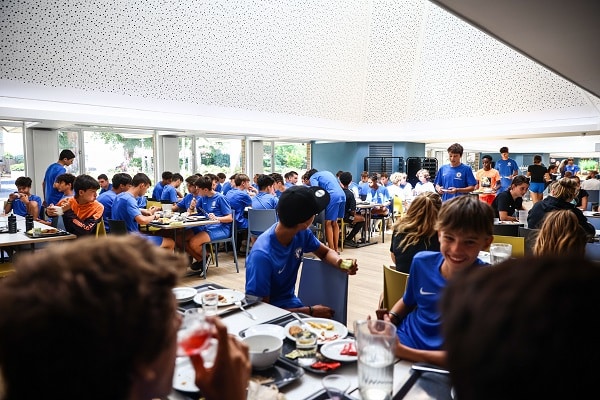
Before a match, a full meal at least 2 hours before kick-off, with complex carbs, lean protein, and vegetables, gives your child the energy to play a full 90 minutes without fading. After the match, a meal rich in both carbs and protein speeds up muscle recovery and gets the body ready for the next session.
3 easy snack ideas for a young footballer
- Wholemeal toast with peanut butter and banana
- Cottage cheese with berries and honey
- A homemade smoothie with plant-based milk, banana, and porridge oats
These snacks are simple, quick to put together, and well suited before or after a training session.
Nutrition at Looking For Soccer camps
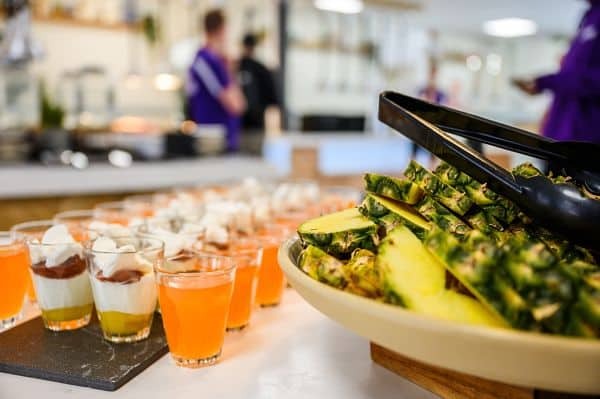
Some of the camps featured on Looking For Soccer pay particular attention to sports nutrition, especially residential programmes. In these programmes, meals are prepared directly by the club, often overseen by professional nutritionists or dietitians who design menus around the specific needs of young athletes: carb loading before sessions, protein after training, and monitored hydration throughout the day.
That’s a genuinely useful advantage for families: your child picks up good eating habits directly on-site, guided by professionals, without you having to plan meals yourself during the trip. For families considering a more structured year-round programme, this same nutritional support is built into soccer boarding school programmes, where nutritional tracking is part of daily life, not an afterthought.
Looking For Soccer offers football camps at recognised clubs where everything is built around the young player’s development, nutrition included. To find the right camp for your child’s profile, browse our selection of best football camps for children.
What your child eats, they play on the pitch
Nutrition for a young footballer isn’t about restriction or rigid discipline. It’s about balance: carbs for energy, protein for muscle recovery, good fats for endurance over time, and consistent hydration throughout the day. These simple habits, built early, make a genuine difference on the pitch and reduce injury risk.
Fequently Asked Questions about Nutrition for young footballers
How many meals should a young footballer eat per day?
Three main meals plus one or two snacks is generally enough, particularly on training or match days. The key is spreading carb and protein intake across the day rather than loading it into one sitting.
Should a young footballer take supplements?
In most cases, no. A varied, balanced diet covers a young athlete’s needs in full. Supplements should only be considered on a GP’s or sports nutritionist’s recommendation, in the case of a confirmed deficiency.
What if my child isn’t hungry before a match?
This is common, often tied to pre-match nerves. Go with a lighter but still energy-dense meal 2 to 3 hours out, and add an easy-to-digest snack (banana, fruit puree) 30 to 60 minutes before kick-off if appetite stays low.
Are energy drinks okay for young footballers?
No. Sugary energy drinks aren’t appropriate for children and adolescents. Water remains the go-to before, during, and after play, with electrolyte drinks reserved for genuinely intense conditions, such as matches played in extreme heat.
At what age should I start adjusting my child’s diet around competitive football?
Once training becomes a regular part of the week, generally from around age 8 to 10, it’s worth building good eating habits around training and matches. The earlier these habits stick, the more natural they become heading into adolescence, when energy needs increase significantly.
You might also enjoy: