

ADHD (Attention Deficit Hyperactivity Disorder) affects between 5 and 7% of children worldwide. For many families, finding an activity that genuinely channels their child’s energy, builds lasting confidence, and fits into the rhythms of daily life can feel exhausting. Football comes up repeatedly in these conversations. But beyond instinct, what does the research actually say? Is it well-suited to children with ADHD, or just another option among many? The evidence is clear and it’s encouraging.
What sport does to an ADHD brain ?
Physical exercise acts directly on the neurotransmitters most implicated in ADHD, such as dopamine and noradrenaline. These are precisely the same pathways targeted by ADHD medication. A meta-analysis published in the Journal of Pediatrics (Pontifex, 2013) documented a 30 to 40% improvement in executive functions (attention, inhibition, working memory) after aerobic exercise in children with ADHD. Sport doesn’t replace clinical support. But it is a recognised complementary approach, and it is increasingly integrated into guidance from health professionals and educational specialists working with neurodiverse children.
A 2024 study published in Frontiers in Psychology further confirmed that football, as a multi-cognitive activity combining decision-making, perception and physical execution, places unusually high cognitive demands on young players, producing improvements in executive function that standard PE lessons do not replicate.
Why football specifically and not just any sport ?
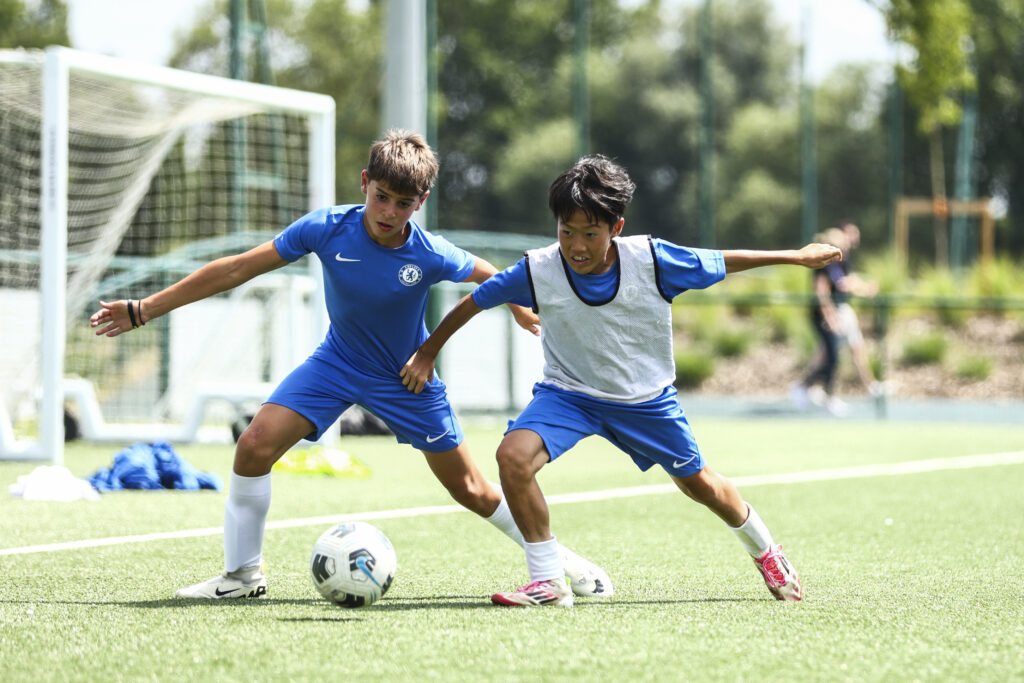
Not all sports are equal for a child with ADHD. Researchers consistently draw a distinction between two categories:
- Closed-skill sports (swimming, athletics): repetitive movements, predictable environment.
- Open-skill sports (football, basketball, tennis): changing environment, rapid decisions, constant adaptation.
A 2025 longitudinal study from the UK’s own Millennium Cohort Study, tracking 3,526 British adolescents from age 14, found that team ball games showed the strongest and most consistent association with executive function more so than individual ball games, swimming, or general physical activity levels. The researchers concluded that open-skill team sports, particularly football, offer cognitive benefits that go beyond what you’d expect from physical exercise alone.
A review updated in May 2025, medically reviewed by psychiatrist Nicole Washington, confirms that open-skill sports such as football are particularly beneficial for attention difficulties, while closed-skill sports tend to help more with hyperactivity and impulsiveness. The key factor: football requires a child to constantly read a situation and respond. It’s precisely the kind of stimulation that trains executive function most effectively.
The concrete benefits of football for children with ADHD

Here’s what the evidence documents for children with ADHD who play football regularly:
- Attention and focus. Football demands constant alertness like reading the game, anticipating movement, making decisions under pressure in split seconds. This sustained cognitive demand trains the brain to hold attention on a concrete, motivating task and it’s something classroom environments rarely achieve for children with ADHD.
- Managing hyperactivity. UK health guidance recommends at least 60 minutes of moderate to vigorous physical activity daily for children. Football played in a dedicated football camp, at a local club or school team, fits naturally within that framework and provides a structured, healthy outlet for excess energy.
- Self-esteem and social skills. Team sport doesn’t carry the same pressure as a classroom. A child with ADHD can find a role on the pitch that builds genuine confidence. An older 2014 study found that for some children with ADHD, team sports specifically improve social skills deficits, something individual sports don’t replicate in the same way.
- Learning to follow rules and structure. Football teaches rule-following, respect, resilience in defeat, and the value of effort. Many children with ADHD find these competences genuinely difficult to build within a traditional school setting, but can develop more readily through sport.
What parents should pay attention to
Football is accessible to the vast majority of children with ADHD. A few practical adjustments make a meaningful difference to whether the experience is positive from the start:
- Match the group to the child’s level. A child who feels genuinely at home in their group develops faster and stays more engaged. If your child’s emotional maturity is slightly behind their chronological age, a group with slightly younger children is often the right starting point. Our article on the right age to start a football camp gives some practical benchmarks.
- Prioritise enjoyment over results. The goal here is not to produce a future Premier League player. It’s to give the child a space where they feel capable, wanted, and included. A child who genuinely enjoys it comes back consistently and that consistency is what generates the real neurological benefits over time.
- Give it time. The first few sessions can be disorienting. Most children with ADHD find their footing with patience and once football clicks for them, it often becomes one of the most stabilising routines in their week. If an early experience doesn’t go well, look at the reasons before concluding the sport isn’t right.
For families looking more broadly for a structured, enriching activity for an active child or teenager, football stands out as one of the most complete options available.
Summary
| Benefit | Mechanism |
|---|---|
| Better concentration | Post-exercise dopamine stimulation |
| Reduced hyperactivity | Energy expenditure + emotional regulation |
| Executive function gains | Dynamic, unpredictable game environment |
| Self-esteem | Group belonging, valued role within the team |
| Social skills | Shared rules, teamwork, peer relationships |
The ADHD brain just needs the right pitch
Football isn’t a cure. But few activities bring together so many advantages for a child with ADHD: constant cognitive stimulation, intense physical output, group belonging, a clear structure of rules, and immediate enjoyment. That combination drives consistency and consistency is what produces lasting change in attention, impulsivity, and confidence.
For parents looking for a structured, rewarding activity for their child, football is well worth serious consideration. The most important thing is finding the right club, the right coach, and giving your child the time to find their place on the pitch.
Frequently asked questions about ADHD and football
Can football replace ADHD medication or therapy?
No. Football is an effective complement, not a substitute. The benefits of sport on ADHD symptoms are scientifically documented, but they sit alongside medical, psychological, or speech and language support, depending on the child’s individual profile and needs.
At what age can a child with ADHD start playing football?
Most clubs welcome children from age 5 or 6. There is no universal minimum. What matters most is the child’s readiness and finding a club environment with small groups and coaches who know how to adapt their approach.
Should I tell the coach my child has ADHD?
It’s strongly recommended. A coach who knows can adapt instructions, feedback, and how they manage the group to better support the child. It isn’t a legal requirement, but it is almost always well received and it genuinely serves your child’s interests.
You might also enjoy:
- The best football camps for children in 2026
- Football Academy Options for Secondary School-Age Players in England
- Find the best football boarding schools – 2026